Alliance-operated journeyFrom US$915
Honeymoon Tour in Kathmandu
A private Kathmandu stay for couples who want heritage, comfort and a slower rhythm.
- Duration
- 6 days
- Best time
- Jan–May · Sep–Dec
- Location
- Kathmandu Valley
- Challenge
- Relaxed

Culture & heritage
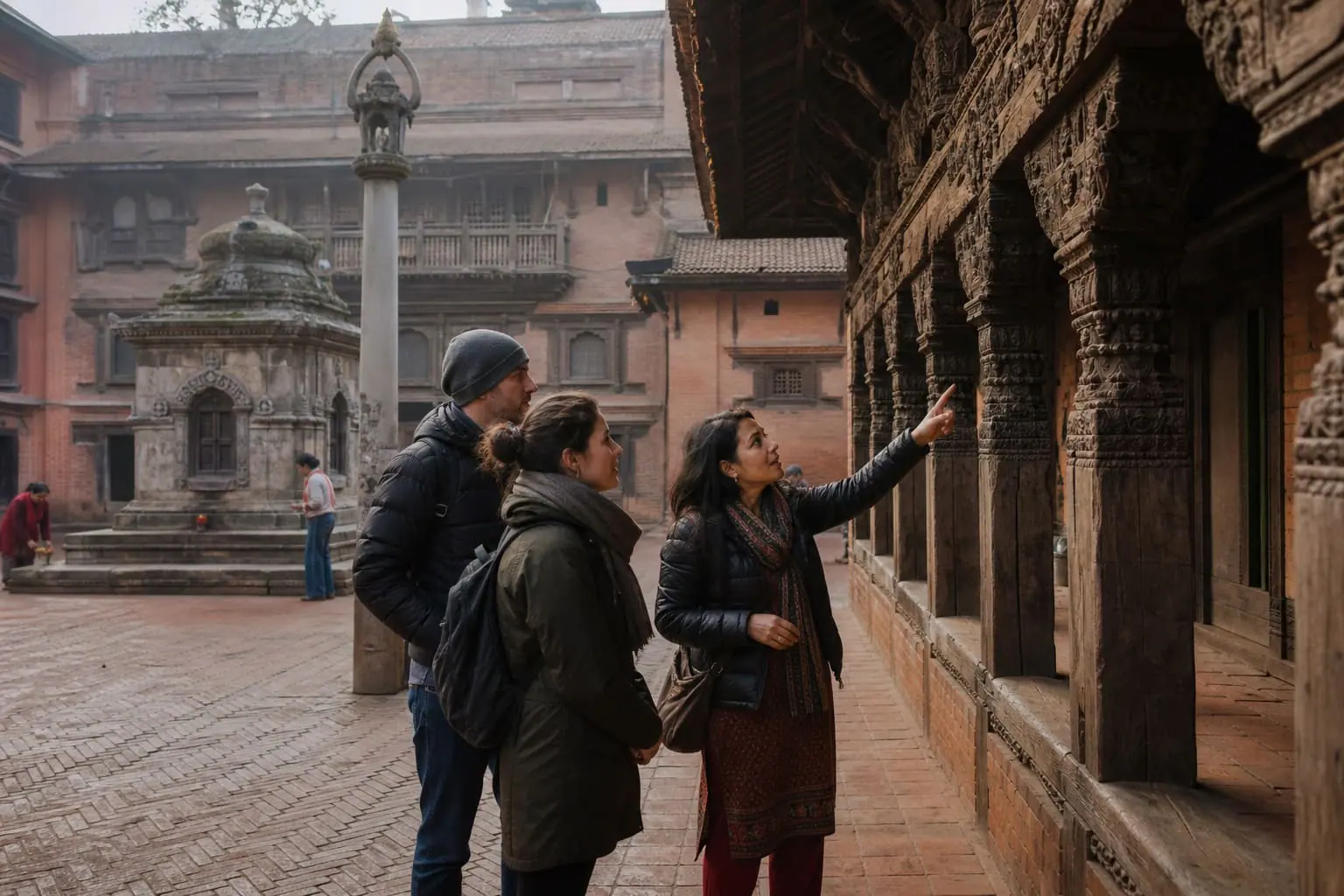
Build a private culture-led journey around historic cities, Buddhist stupas, Hindu sacred places and living traditions. Start with Kathmandu Valley, then choose the pace, site access and wider Nepal contrast that fit your group.
Choose by intent
Use this experience-led collection when the priority is understanding Nepal’s living heritage, even if the final itinerary reaches beyond Kathmandu Valley.
Culture-led planning
A strong Nepal heritage journey connects monuments with the living religious, craft and neighbourhood traditions around them. Kathmandu Valley is the natural starting point because its World Heritage property comprises seven monument zones across Kathmandu, Patan, Bhaktapur and four major religious ensembles.
Do not treat all seven zones as interchangeable photo stops. Choose fewer places, allow time for local context and follow current access, photography and conduct guidance at active sacred sites.
| Heritage emphasis | Useful starting places | Best for | Planning note |
|---|---|---|---|
| Historic city life | Kathmandu, Patan and Bhaktapur | Architecture, public squares, courtyards and craft | Give each city its own time and context |
| Buddhist heritage | Swayambhu, Boudhanath and selected monasteries | Living ritual, art and Himalayan Buddhist traditions | Confirm respectful access and festival conditions |
| Hindu sacred traditions | Pashupatinath, Changu Narayan and other active sites | Pilgrimage, ritual landscapes and historic temples | Observe site-specific access and photography rules |
These seven zones belong to one UNESCO World Heritage property. They offer different contexts; they are not seven identical sightseeing stops or a checklist to complete in a single day.
| Monument zone | Heritage focus | Planning consideration |
|---|---|---|
| Hanuman Dhoka Durbar Square, Kathmandu | Historic city square and palace ensemble | Combine with neighbourhood time rather than only monument photographs |
| Patan Durbar Square | Historic urban and architectural ensemble | Allow time for the surrounding city and the group’s craft interests |
| Bhaktapur Durbar Square | Historic urban and architectural ensemble | Give the city a distinct visit rather than squeezing it between long transfers |
| Swayambhu | Buddhist stupa ensemble | Discuss steps and walking needs before confirming the visit |
| Boudhanath (Bauddhanath) | Buddhist stupa ensemble | Respect worshippers, the flow of movement and photography guidance |
| Pashupati / Pashupatinath | Hindu temple and sacred river precinct | The main temple complex is Hindu-only; plan appropriate viewing areas for other visitors |
| Changu Narayan | Hindu temple ensemble and settlement context | Confirm current access and keep time for its setting |
Plan two introductory sightseeing days or three to four days for greater depth as a starting discussion, not a fixed minimum. Tell the planner about your walking and step requirements, preferred guiding language and interests in religion, architecture or crafts. Visits must adapt to access, worship and weather. Confirm entrance tickets, guide time, transport and any proposed workshop availability and costs in the written quotation.
Plan with fewer assumptions
The UNESCO Kathmandu Valley property is composed of seven monument zones: three Durbar Squares, two Buddhist stupas and two Hindu temple ensembles.
Two useful sightseeing days can introduce major areas, while three or four days provides a better rhythm for separate cities, neighbourhoods and active sacred sites.
A knowledgeable local guide can explain how architecture, faith and everyday community life connect. The value is context and respectful navigation, not simply moving faster between monuments.
Nepal Tourism Board states that the main temple complex is open only to Hindus. Other visitors can observe from permitted areas across the Bagmati River. Follow current local directions and photography restrictions; do not assume a paid tour ticket grants access to every part of a sacred site.
Only assume a service is included when the written quotation names it. Ask for an itemised list of site tickets, guide services, transport, meals and any craft or workshop activity; availability and access must be confirmed for your dates.
Source check: Heritage facts reviewed 16 October 2026 against primary public sources. Planning guidance by Best Escape Tour.
Current package options
Alliance Adventure operates these packages. Best Escape presents an independently written planning summary; prices are indicative and the final services, dates and itinerary are confirmed in your written quotation.
A private Kathmandu stay for couples who want heritage, comfort and a slower rhythm.
A culture-led Kathmandu itinerary with time to understand the valley’s living heritage.
A heritage and viewpoint journey for visitors who want mountain scenery without a trek.
A private, faith-led Kathmandu journey shaped around Hindu heritage sites.
A private Kathmandu itinerary centered on Buddhist heritage and living traditions.
Need a different combination?
Tell us what you want to experience and your available days. We will tailor the pace, stays and route around your group.
Design My Nepal Trip