Altitude changes everything
A comfortable Kathmandu day can coincide with severe conditions high in the mountains.


Weather, trekking and tour planning
For the easiest all-round planning, start with spring or autumn. Then choose the exact month around your route, altitude, interests and tolerance for crowds or rain.
The short answer
Autumn often brings clearer post-monsoon mountain views. Spring brings warmer days and rhododendron blooms at suitable elevations.
That does not make other months “wrong.” Winter can work well for culture, wildlife and lower trails, while monsoon travel rewards flexibility and careful route choice.
A comfortable Kathmandu day can coincide with severe conditions high in the mountains.
Pokhara, Chitwan, Kathmandu and rain-shadow areas do not experience a season in the same way.
Use seasonal norms to choose a route, then check current forecasts and local conditions.
What does each season feel like?
Nepal Tourism Board describes five seasons. For trip decisions, we group the year into four useful travel periods.
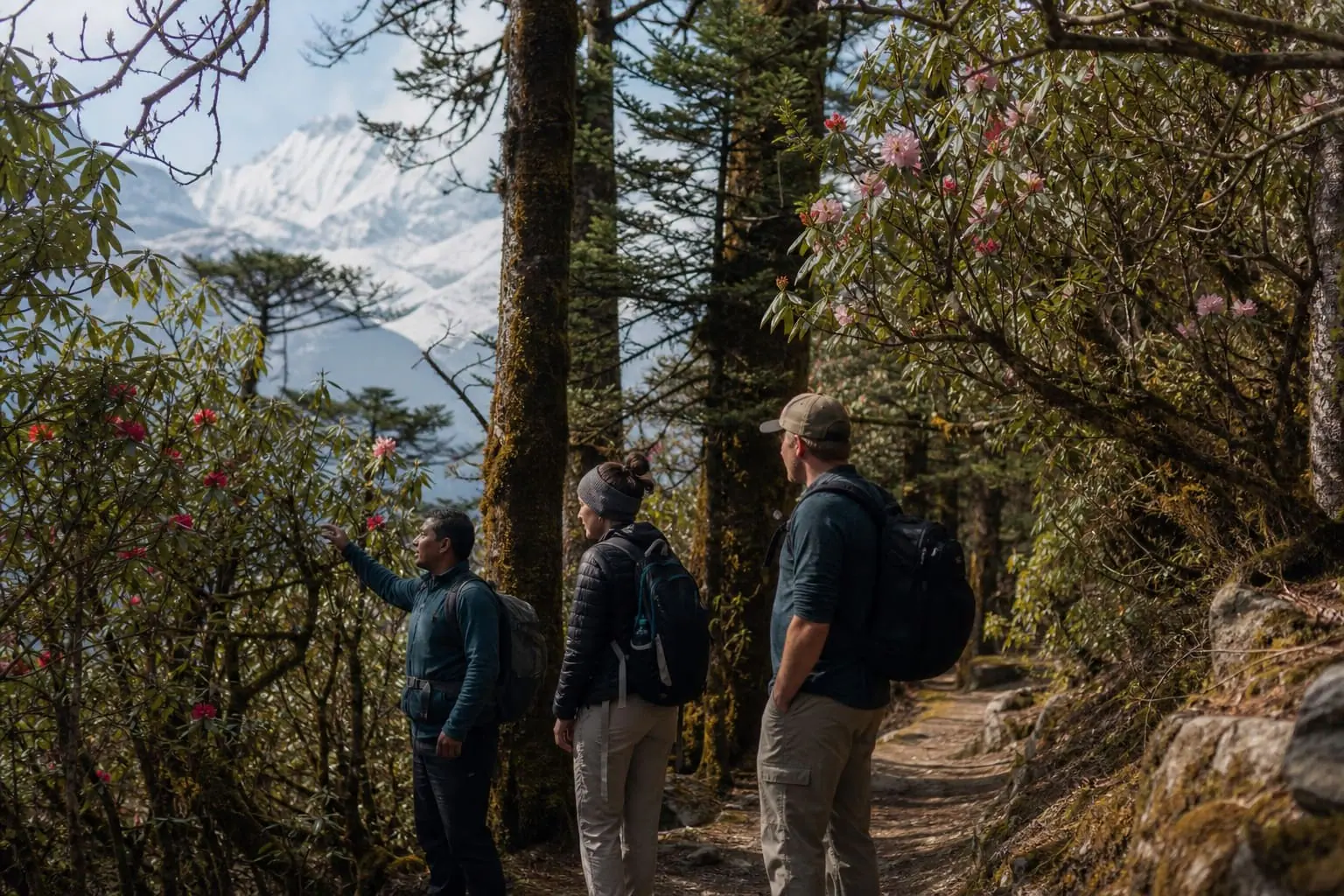
March–May
Warmer days, flowering forests and a wide range of classic journeys.
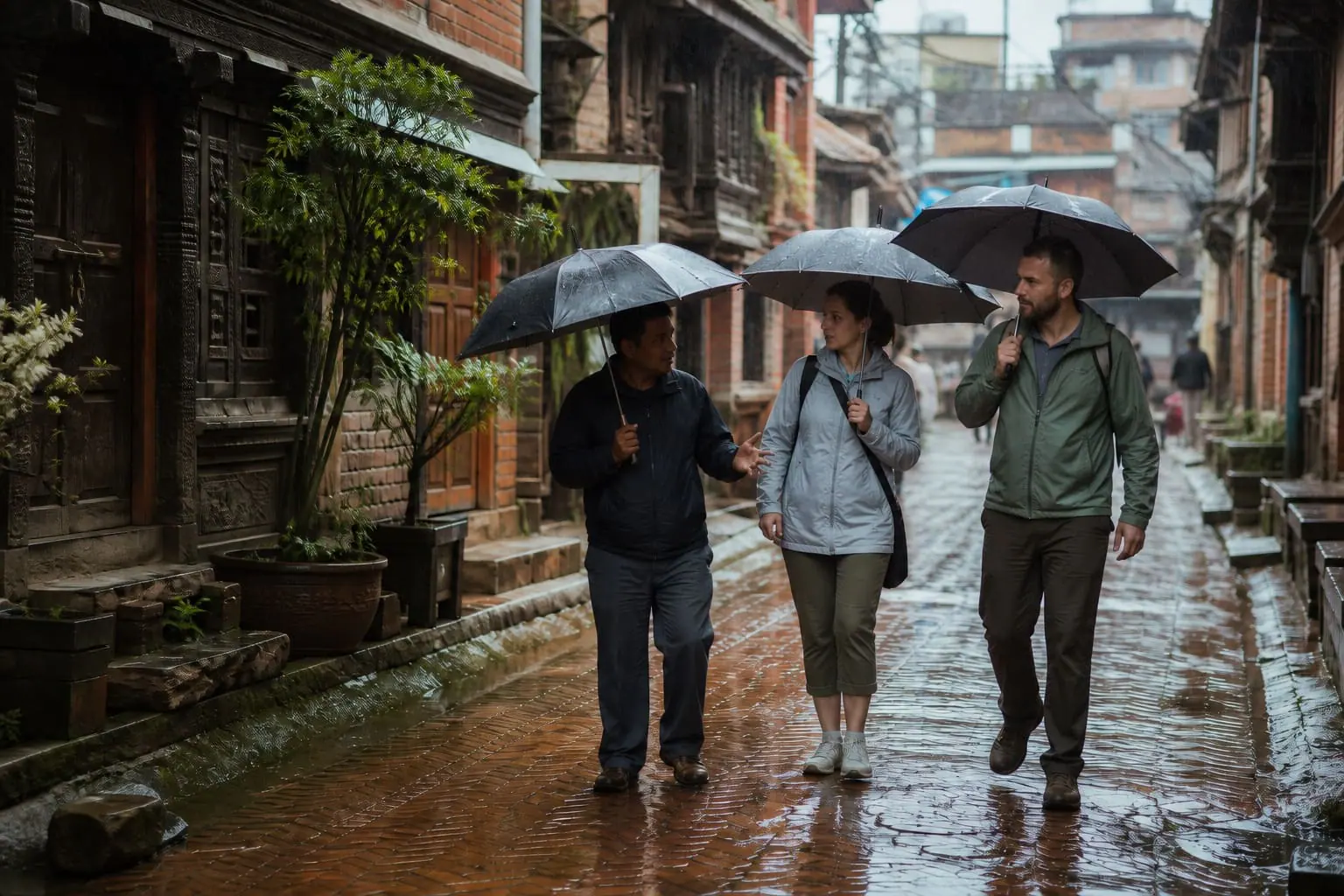
June–September
Green landscapes, warm conditions and a slower, more flexible style of travel.
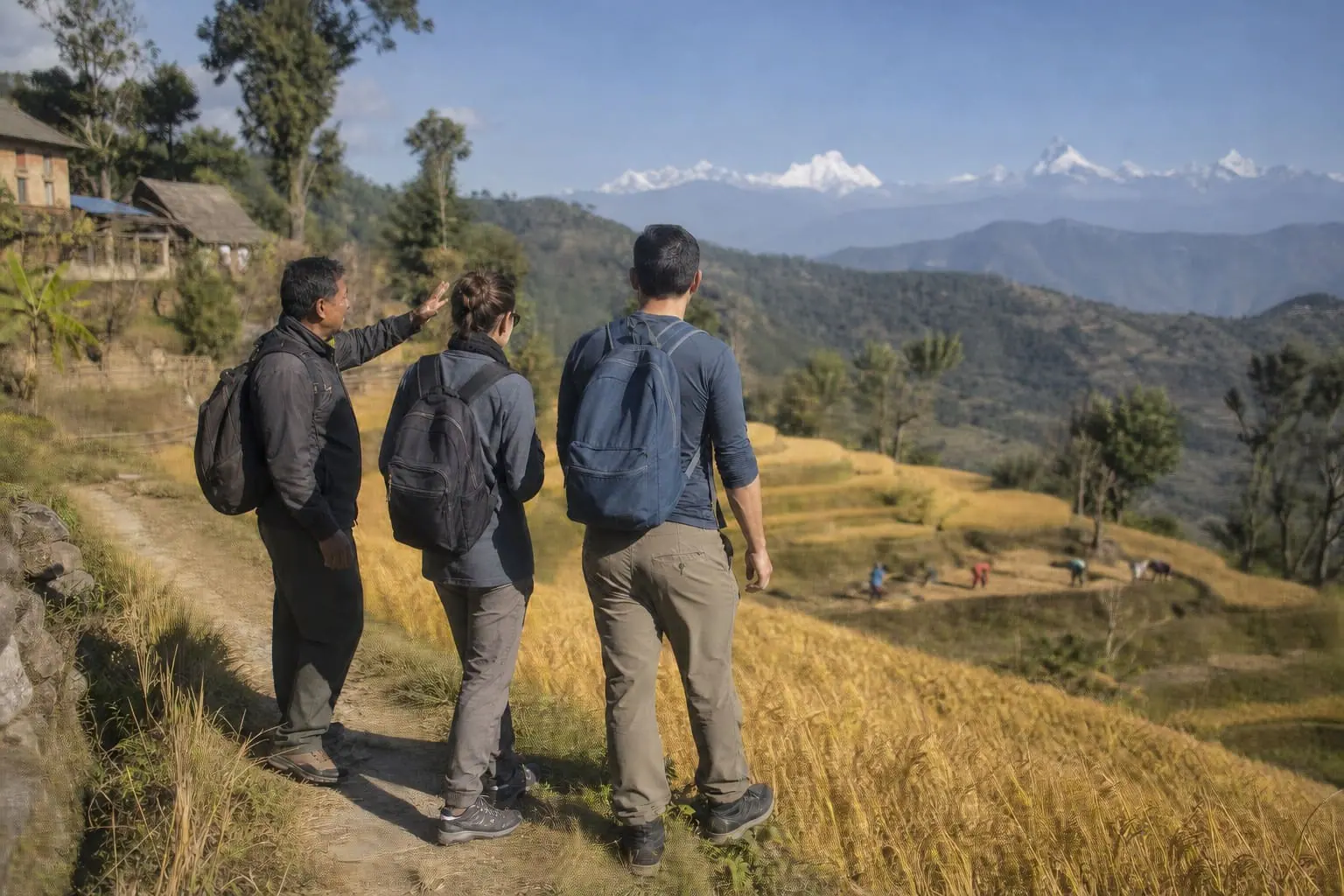
October–November
Clearer post-monsoon skies, settled planning conditions and broad route choice.
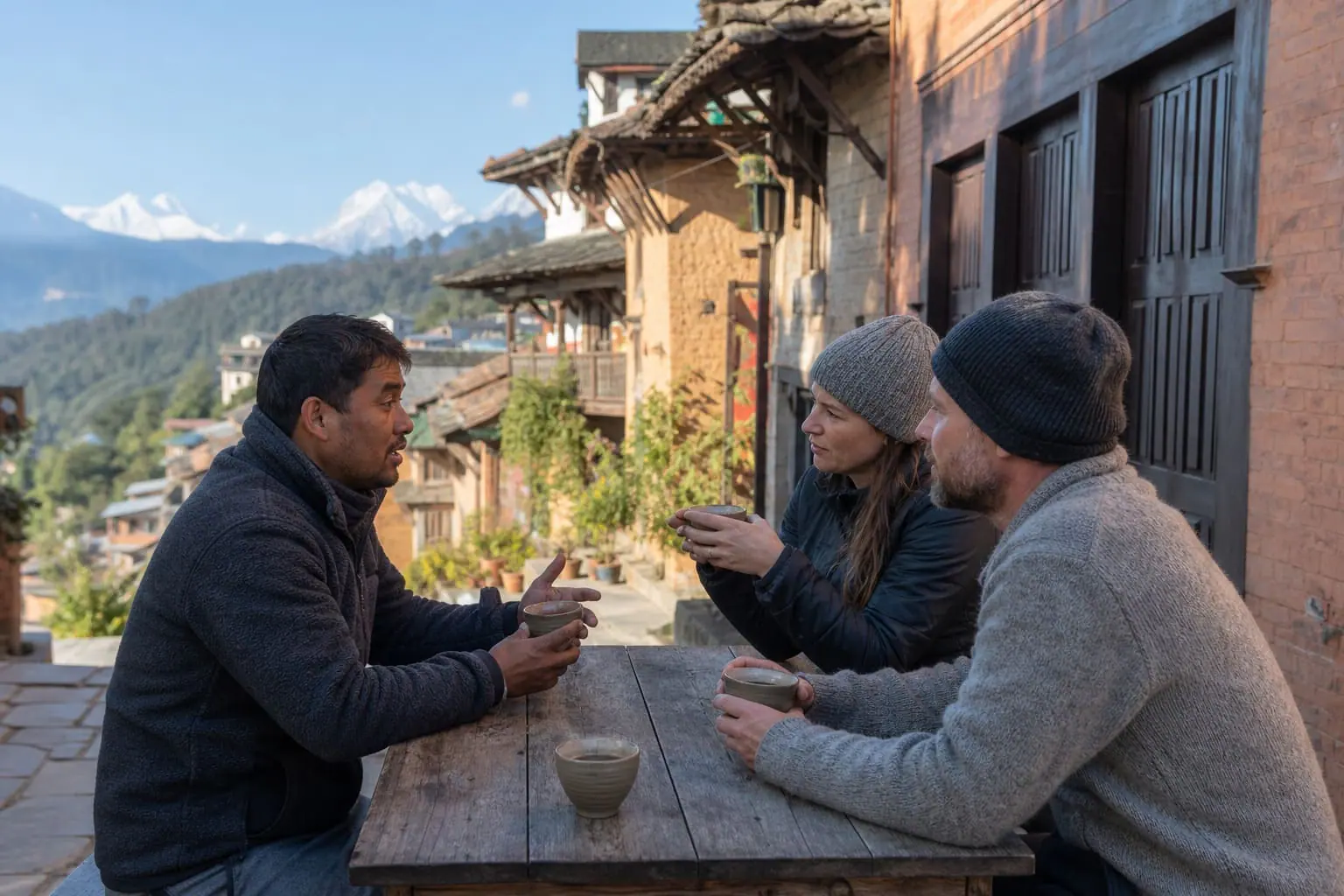
December–February
Cooler, often bright days with a quieter rhythm in cultural and lower regions.
Nepal month by month
This is a decision guide, not a forecast. Conditions can arrive earlier or later in any year.
| Month | Typical pattern | Often suits | Main trade-off |
|---|---|---|---|
| January | Dry and cool, with cold mornings | Heritage, wildlife and lower walks | Short days and serious cold at altitude |
| February | Cool, gradually moving toward spring | Culture, wildlife and selected lower treks | Winter conditions can remain high up |
| March | Spring begins; days become warmer | Trekking and mixed journeys | Visibility and weather can still vary |
| April | Established spring with flowering hills | Classic trekking, scenery and culture | Busy trails and possible showers or storms |
| May | Warmer pre-monsoon conditions | Earlier-month treks and cultural journeys | Heat, haze and rain chances increase |
| June | Monsoon period normally develops | Culture and flexible regional itineraries | Rain starts affecting views and travel |
| July | Monsoon conditions across much of Nepal | Longer cultural stays and rain-shadow planning | Wet trails and transport uncertainty |
| August | Green, warm and generally wet | Culture, photography and selected regions | Cloud, rain and road disruption |
| September | Transition toward post-monsoon | Later-month trekking and fresh landscapes | Rain and cloud may linger |
| October | Often clearer after the monsoon | Complete Nepal journeys and trekking | High demand and busier routes |
| November | Clearer, cooler autumn conditions | Trekking, culture, wildlife and scenery | Nights become progressively colder |
| December | Dry, cool winter conditions | Culture, wildlife and lower routes | Cold at altitude and shorter daylight |
Choose by the trip—not the calendar alone
Start with March–April or October–November, then match altitude and route to current conditions.
Adjust daily timing for winter mornings, pre-monsoon heat or summer rain.
Consider lowland heat, rain and visibility alongside Kathmandu and mountain plans.
Choose clear post-monsoon views—or accept rain, mist and bloom for a different visual story.
These periods often provide the easiest balance across cities, scenery and trails.
Trade peak-season certainty for fewer visitors, colder conditions or more weather flexibility.
Use current information
We use official climate and trekking guidance as a starting point, then adjust the itinerary around altitude, region and current route conditions.
Common timing questions
October and November are strong all-round choices for many first visits because post-monsoon conditions often bring clearer mountain views. March and April are also popular when you prefer spring landscapes and warmer daytime conditions. The best month still depends on your route and interests.
Spring and autumn suit many classic trekking routes. Autumn often brings clearer post-monsoon skies, while spring brings warmer conditions and rhododendron blooms at suitable elevations. Altitude, route and current forecasts matter more than the season name alone.
Yes, if you accept rain and build flexibility into the itinerary. Cultural journeys, green landscapes and selected rain-shadow routes can work well, but road conditions, visibility and domestic travel can be less predictable.
Winter can suit Kathmandu Valley, wildlife areas, lower-elevation walks and travelers who prefer a quieter rhythm. Expect colder mornings and nights, shorter days and more severe conditions at higher elevations.
Cultural travel is possible throughout the year with suitable planning. Wildlife experiences can be included in several seasons, but heat, rain and visibility change the experience. Choose the wider itinerary first, then match the month to its main regions.
Seasonal patterns are useful planning guides, not guarantees. Conditions vary by altitude and region, and each year can differ. Check current Nepal Department of Hydrology and Meteorology information and local route advice before departure.
Already have dates?
Share your month, available days and interests. A Kathmandu-based planner will suggest two or three suitable journeys.
Design My Nepal Trip